The short answer. InSightOS drafts board commentary from the same records that produced the numbers, cites each figure, and marks which numbers are calculated from the ledger and which words were drafted and edited. Your team edits it, the CFO approves it, and the whole history is kept for audit.
Every figure on this page comes from one worked Q3 close for a Series B SaaS company, the same example shown in our product walkthrough. Operating expenses: budget $5,600,000, actual $5,687,000.
What goes wrong with board commentary today?
The commentary is written last, under time pressure, from numbers copied out of three files. When a director asks where a figure came from, the answer is "I'll come back to you". When the same question comes up next quarter, the analysis starts from scratch because the reasoning was never kept.
How does InSightOS draft the commentary?
From the explained variance, not from a blank page. For page 7 of the Q3 pack it drafted:
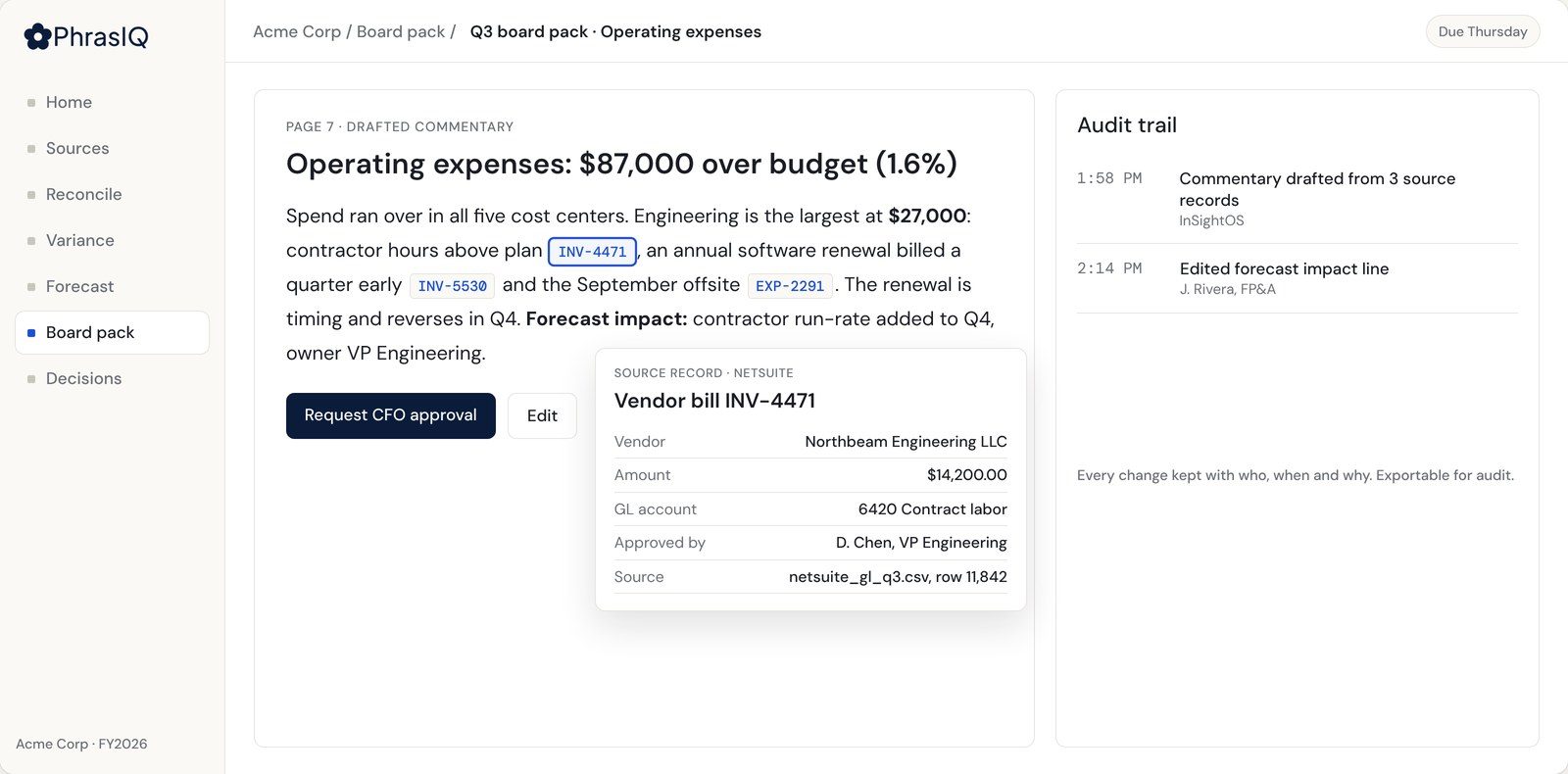
Operating expenses: $87,000 over budget (1.6%). Spend ran over in all five cost centers. Engineering is the largest at $27,000: contractor hours above plan (INV-4471), an annual software renewal billed a quarter early (INV-5530) and the September offsite (EXP-2291). The renewal is timing and reverses in Q4. Forecast impact: contractor run-rate added to Q4, owner VP Engineering.
Every invoice reference is a link. Click INV-4471 and the vendor bill opens: Northbeam Engineering LLC, $14,200, GL 6420, approved by D. Chen, VP Engineering, from row 11,842 of the ledger export.
How can a reader tell a calculated number from a written sentence?
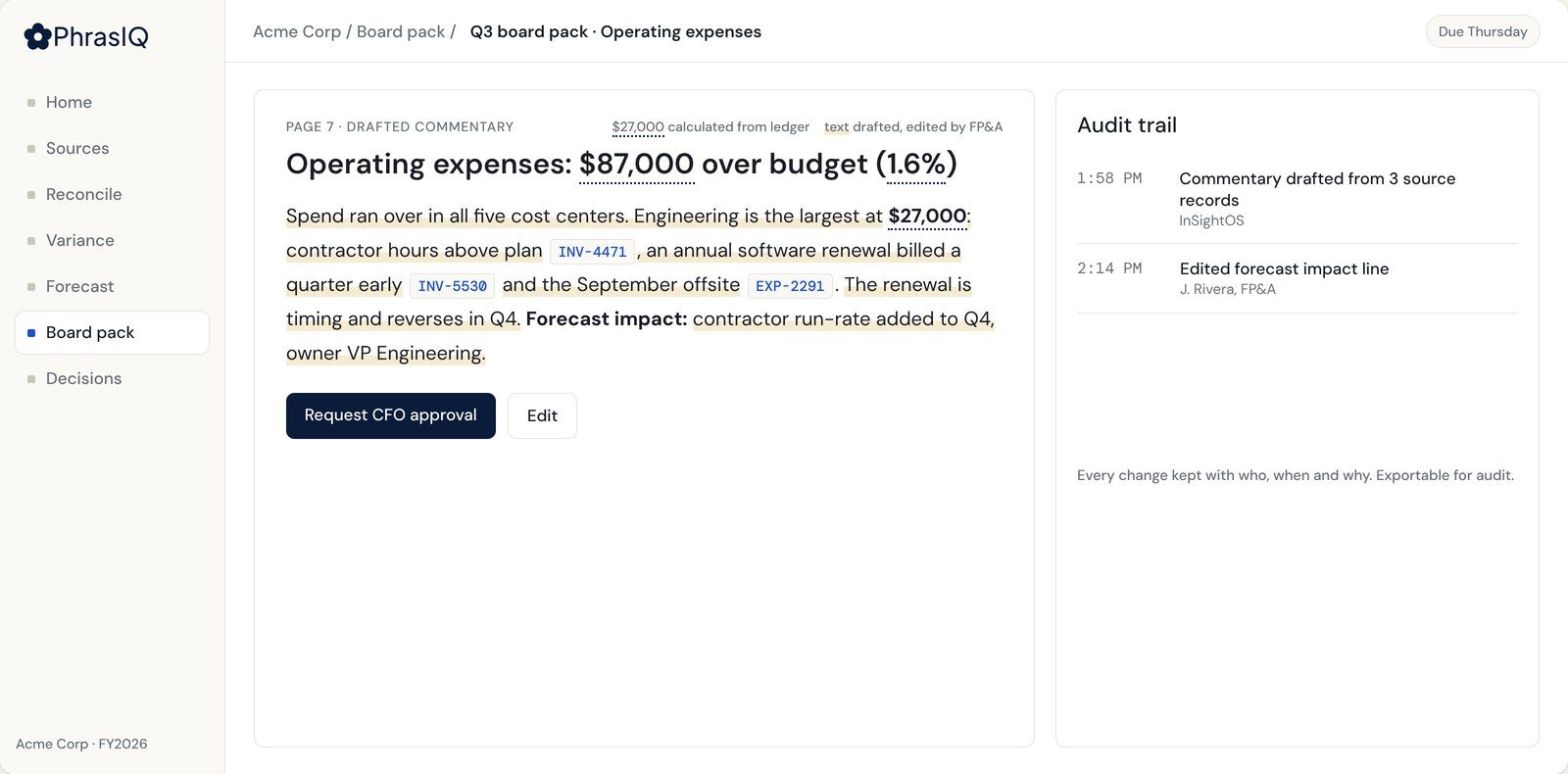
The page marks them. Figures such as $27,000 are calculated from the ledger and shown with a dotted underline; text drafted by InSightOS and edited by FP&A is highlighted separately. Directors and auditors see at a glance which parts came from the system of record and which came from a person or a model.
Can the team question a draft before it goes out?
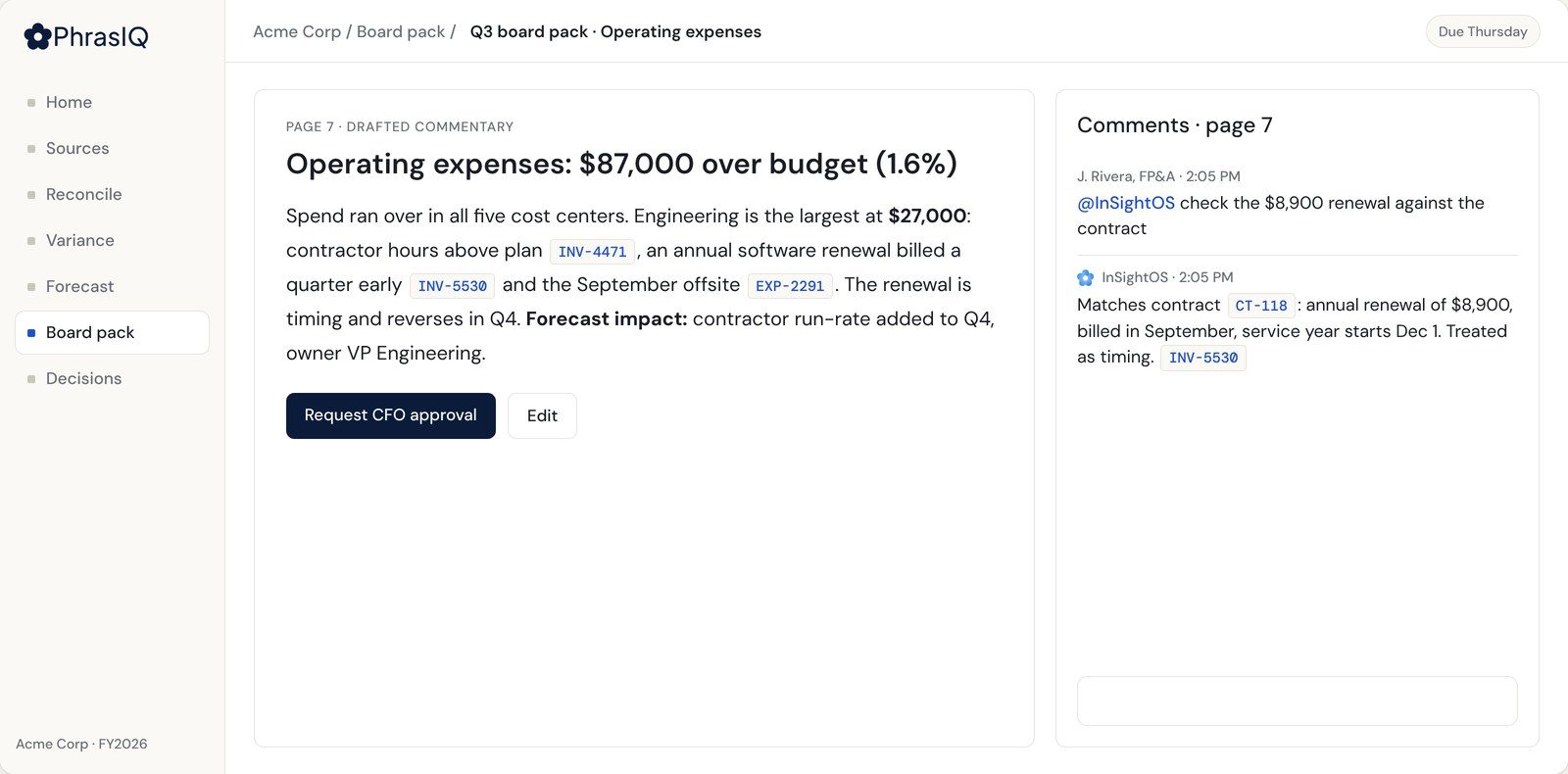
Yes, in the comments. J. Rivera in FP&A wrote "@InSightOS check the $8,900 renewal against the contract", and the reply came back in the thread: matches contract CT-118, annual renewal of $8,900, billed in September, service year starts Dec 1, treated as timing.
What is kept for audit?
| Time | Event | By |
|---|---|---|
| 1:58 PM | Commentary drafted from 3 source records | InSightOS |
| 2:05 PM | Renewal checked against contract CT-118 in comments | J. Rivera, FP&A |
| 2:14 PM | Forecast impact line edited | J. Rivera, FP&A |
| 2:20 PM | Approval requested | J. Rivera, FP&A |
| 2:32 PM | Approved | M. Patel, CFO |
The trail can be exported, and the decision is stored, so when a similar renewal is billed early next year the earlier treatment and its owner come up automatically.
Can I start the draft from anywhere?
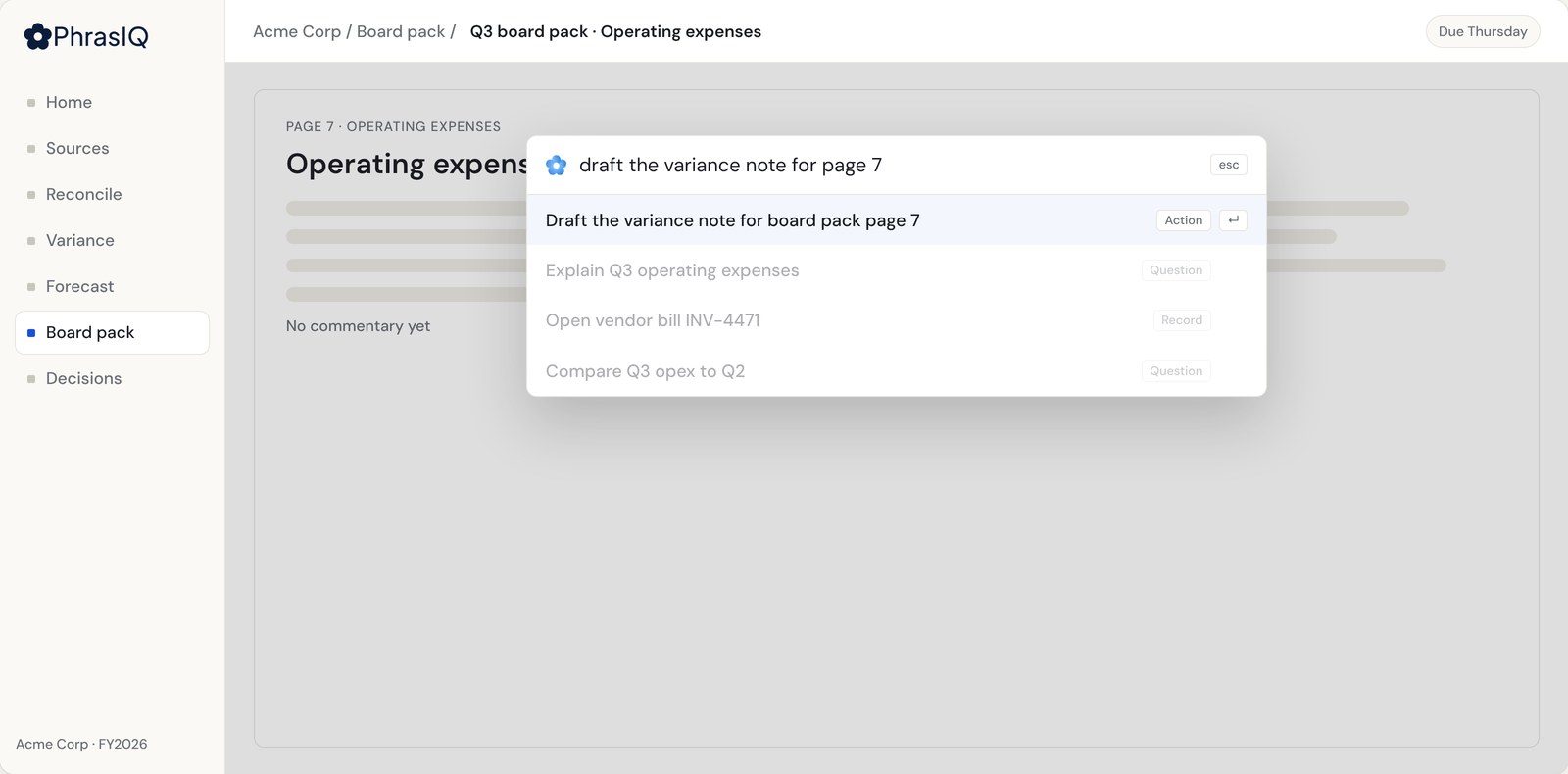
Press ⌘K and type the request, for example "draft the variance note for page 7". InSightOS drafts it from the source records and the page fills in.
Frequently asked questions
Does the AI write the numbers?
No. Numbers are calculated from your ledger, plan and source documents. InSightOS drafts the words around them and cites the records they came from.
Can we edit the draft?
Yes. Drafts are edited by your team before approval, and every edit is recorded with who made it and when.
Can directors see the sources?
If you share the pack through InSightOS, every cited figure opens its source record. If you export to slides or PDF, the citations stay as references.
What happens to the reasoning after the meeting?
It is stored with the decision and its owner. The next time the same pattern appears, the earlier decision comes up with it.
Who approves the final version?
Whoever your process names, usually the CFO. Approval is a recorded step, not an email.